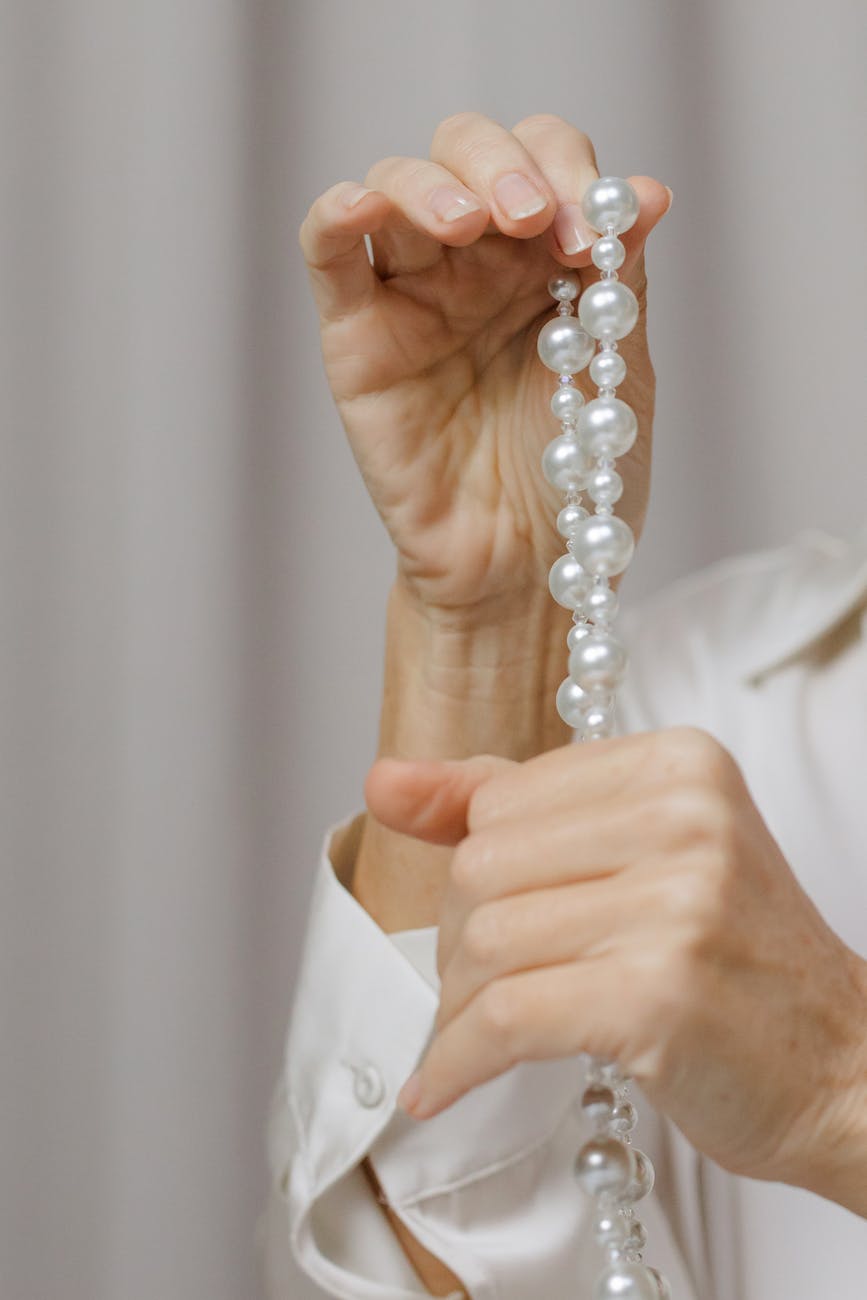
Taking Care of Pearls
“Pearls are the most natural gemstone that you can wear. With proper care they will give you a lifetime of pleasure.”
This quote from Chrissie Douglas, renowned expert at pearls.co.uk, sums up the importance of pearl care. Quite simply, taking care of your pearls helps you get the most out of your truly stunning jewellery.
Thankfully, there are several ways to do so – from wearing and storage to cleaning and maintenance.
Wearing your pearls
Pearls are the most sensual and flattering of gems. They beautify their owner, reflecting a soft glow that enhances the natural harmony of our features. It is therefore essential to maintain the gentle lustre that has been so painstakingly created by nature.
Fortunately, pearls improve their lustre when worn next to the skin, as the oils of the person wearing them keep the pearls moisturised. So, in actual fact, wearing your favourite jewellery is the number one priority to keep it looking its best.
Pearl storage
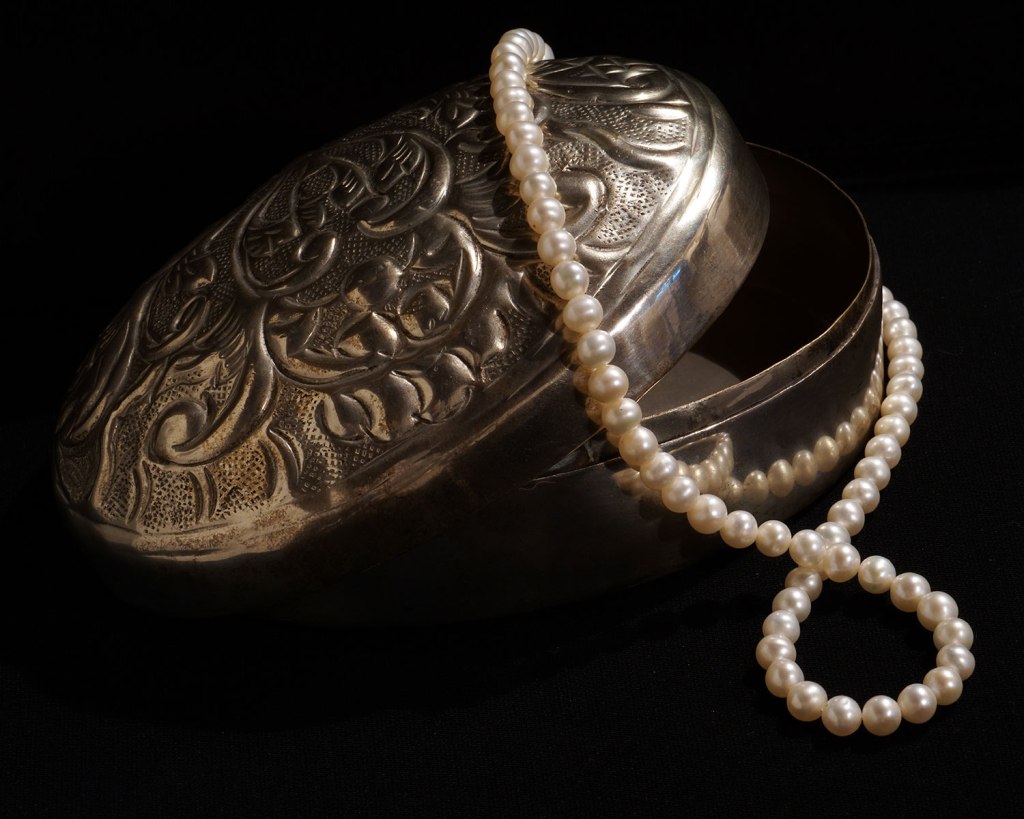
When pearls are not being worn, place them carefully in silk or chamois leather to conserve their lustre. If pearls are carelessly stored in a jewellery box with other harder materials like diamonds or metal they will be scratched. By keeping them in a chamois leather or silk pouch, you will also prevent them drying out.
A storage place that is too dry, hot or does not allow air to circulate will eventually dull the lustre of pearls. If pearls are kept in an airtight environment, such as sealed plastic bags or safes for too long, the nacre will eventually turn yellow, dry out and the surface of the pearl will crack.
Pearl strands should also never be stored in a hanging position, as this makes the silk thread gently holding your pearls together slack and reduces the strength and elasticity of the thread.
Pearl cleaning
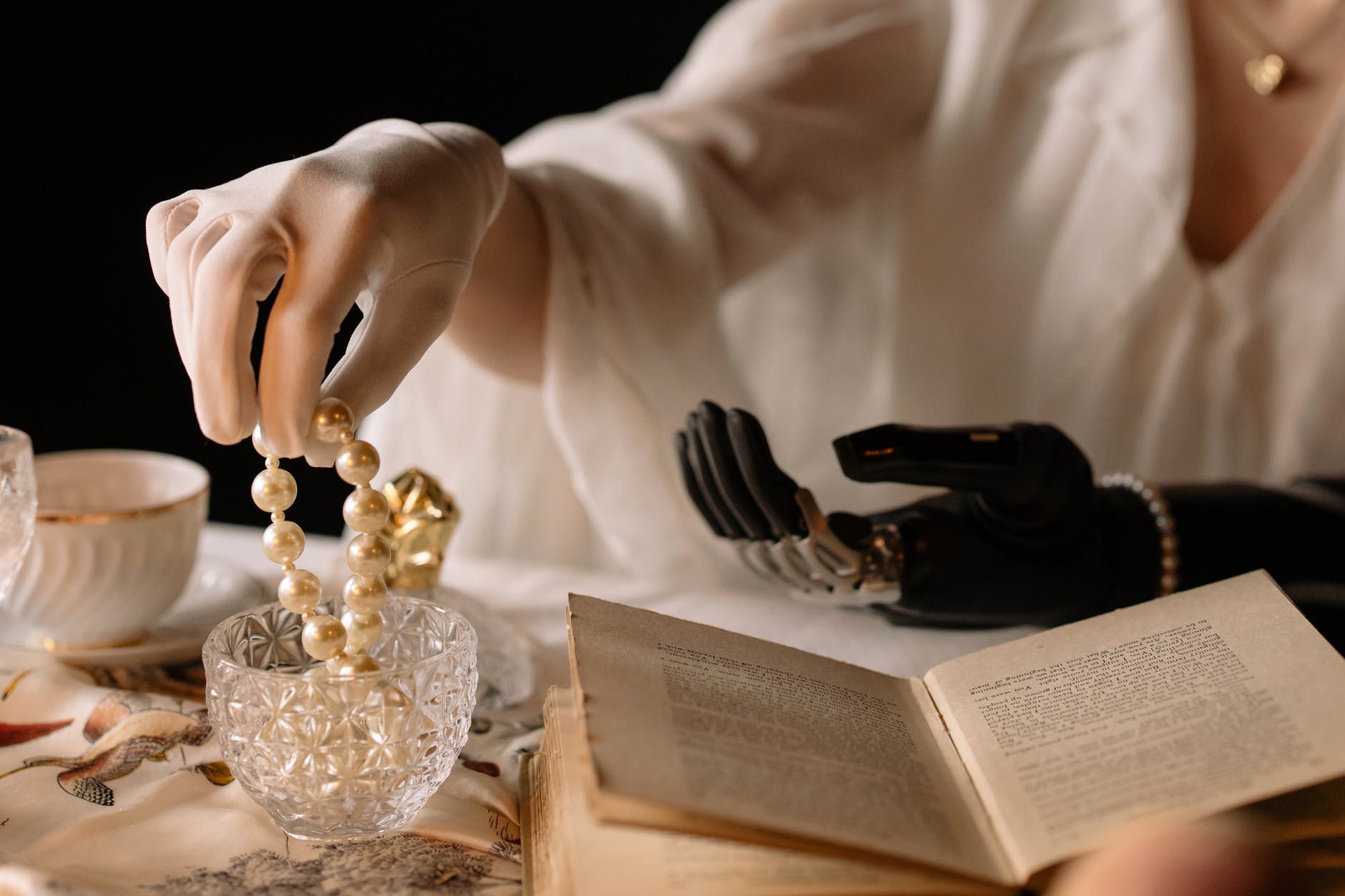
Both natural perspiration and synthetic perfume can wear away the surface of your pearls over time. To avoid this, you should always wipe your pearls after wearing them.
Never clean pearls with a toothbrush or scouring pad to remove a stubborn piece of dirt. Instead, rub the pearl with your fingernail to remove the offending article. Remember, pearls are natural creations, fingernails have the same hardness as pearls and will therefore not scratch their surface.
Do not attempt to clean pearls with detergents, bleaches, powdered cleaners, baking soda, talcum powder, milk, dish-washing liquid, or even commercial jewellery cleaners unless the packaging specifically stipulates that it is designed for pearls. This is because many cleaners contain ammonia, which can damage the pearl.
Similar to the process of cleaning silver, when pearls are cleaned in the correct solution, they lose one layer of nacre. This is not drastic as even low-quality cultured pearls have many layers of nacre. However, it is important not to leave the pearls in the solution for too long otherwise you might get a nasty surprise! Furthermore, pearls should never be cleaned in an ultrasonic cleaner, as this could shatter them. Steam cleaners could also harm pearls due to the high degree of heat used. It is best to have pearls cleaned by a reliable jeweller. A good time to do this is during their yearly check-up or just prior to re-stringing, as explained below…
Pearl Maintenance
In the long term, pearl owners should give all pearl jewellery an annual check-up. Look for thread stretching, discolouration or fraying. If you wear them often – as recommended – it’s well worth having your pearls cleaned by an expert at least once a year.
It is also advisable to re-string them as soon as the thread discolours, stretches or frays. The point of most stress in a necklace is between the clasp and the first pearl, where the gimp (the metal coil used to protect the silk) is situated. Keep an eye out for any sign of discoloration. If the gimp turns green, it is a sure sign that the silk is rotting underneath.
‘No-go’s for your pearls
Finally, here are a few things to steer clear of to keep your pearls at their best.
Keep your pearls away from perfume, hairspray and fake tan
As pearls are alkaline, they are vulnerable to all acids including perfume and fake tan, hairsprays and cosmetics. If fake tan is applied to the skin, make sure that pearls are not worn for at least 3 days after applying the tanning chemicals to your skin, and that any residue of fake tan has been thoroughly washed off before wearing your pearls.
On a daily basis, it is advisable to apply your make-up and perfume first, then wash your hands, and then put on the pearls as a finishing touch. After wearing your pearls, it is best to wipe them with a slightly damp, clean, soft cloth, using water only to remove any residual perspiration or perfume which would erode the nacre. Lay the pearls on a dry cloth to dry out overnight. Do not be tempted to wear a strand of pearls when the silk string is wet, as the silk will stretch and leave large unsightly gaps between the pearls.
Don’t wear pearls for aerobic exercise or swimming in treated water
Excessive or acid perspiration, as produced by aerobic exercise, can reduce the lustre of pearls. Contact with dish-washing liquid, vinegar or lemon juice can seriously damage pearls. Bathing or swimming in treated water has an equally damaging effect, as the acids and chemicals erode the pearls’ nacre, eventually leaving the pearl with no lustre, or worse still, with no nacre in the case of a cultured oyster pearl.
Swimming in seawater is beneficial to pearls that have grown in an oyster as it re-hydrates them naturally. Unfortunately, the same cannot be said for the string on which the pearls are held, as when the salt dries, it makes the silk very abrasive and shortens its life considerably.
Do not test the genuineness of a pearl by biting it with your teeth.
The concentric formation of the pearl layers makes them structurally very strong. But their surface is approximately the same hardness as our fingernails.
Despite it being an age-old practice, you should never test the genuineness of a pearl by biting or passing it across your teeth. The ‘tooth test’ is not only unhygienic but also damaging to the pearl as it very easily scratches the surface. A more elegant way to ascertain if your pearls are natural or cultured as opposed to imitation, is to rub one pearl against another. The friction between both surfaces should feel gritty.
Are you searching for pearl jewellery?
If you are searching for pearl jewellery, look no further than Coleman Douglas Pearls. pearls.co.uk is the perfect destination for remarkable pearl jewellery.
 Taking Care of Pearls